Loading...
Serving Moorhead, MN and surrounding areas. (218) 227-4510
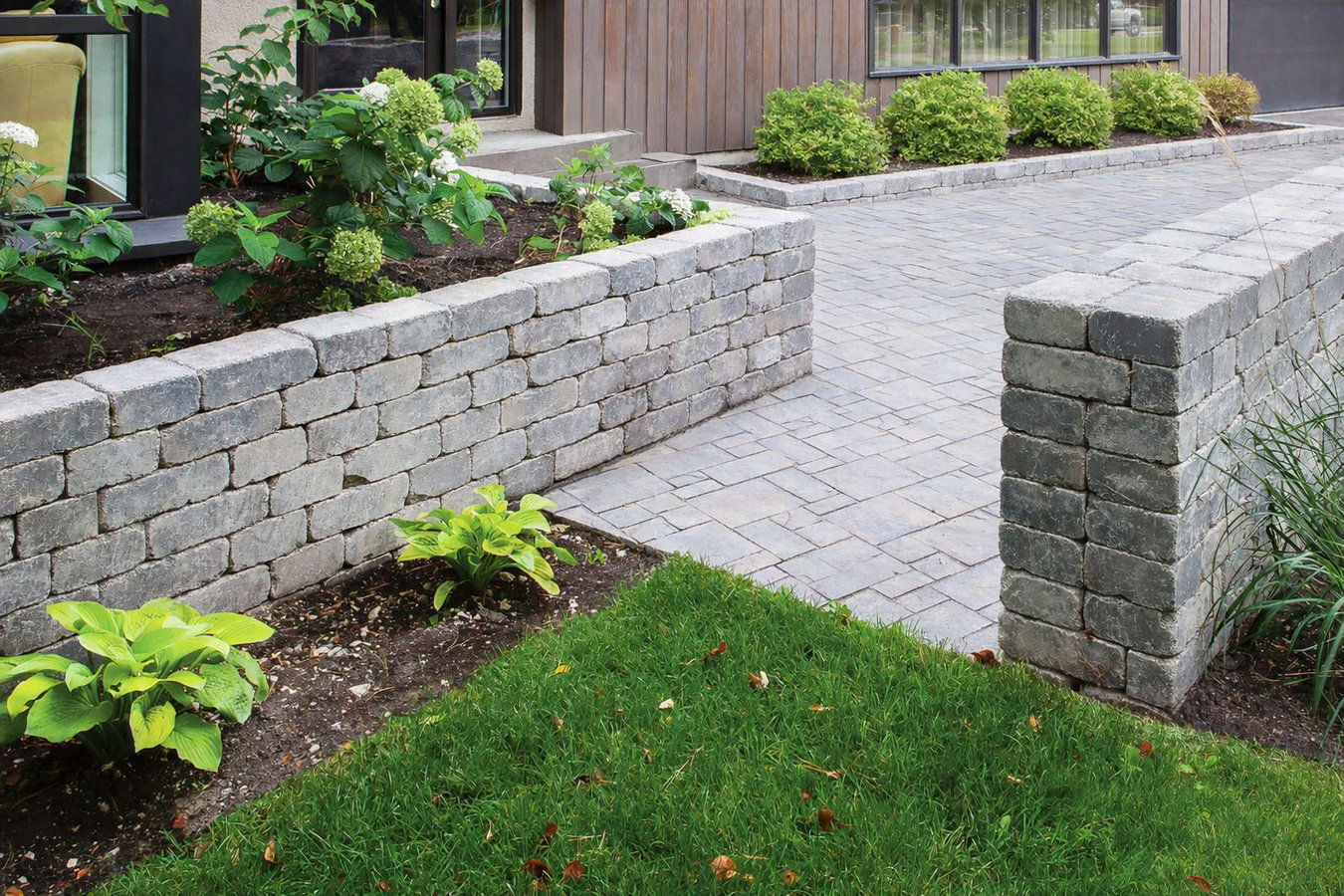
Soil sliding toward your foundation? Yard too steep to use? We build concrete retaining walls in Moorhead with frost-depth footings and proper drainage so they hold up through decades of Minnesota winters.
Concrete retaining walls in Moorhead, MN are built by excavating a footing trench well below the local frost line, pouring a concrete footing, constructing the wall itself in poured or block concrete, and installing drainage aggregate and pipe behind the wall before backfilling - most residential projects take two to five days of active work.
If your yard has a slope that washes out every spring, or you have an older wall that is starting to lean forward, the fix is almost always rooted in what you cannot see - the footing depth and the drainage system behind the wall. Moorhead's Red River Valley clay soil holds water and exerts pressure that a shallowly footed wall simply cannot resist. Many homeowners also pair a retaining wall project with concrete floor installation when they are regrading an area near their home.
If you can see a slope in your yard slowly creeping downhill - especially after rain or snowmelt - the soil needs to be held in place. In Moorhead's clay-heavy soil, this movement can happen gradually over several seasons before it becomes obvious. Once it reaches your foundation or driveway edge, the repair gets significantly more expensive.
Moorhead's flat terrain and clay soil mean water has nowhere to go quickly after a thaw. If a section of your yard holds standing water for days after a rain or the spring melt, a retaining wall combined with proper grading can redirect that water away from your home. Left alone, that chronic moisture will eventually work its way into your basement.
If you have an older timber, block, or concrete wall that has started to tilt forward or shows cracks running through it, that wall is under more pressure than it can handle. In Moorhead, walls without deep enough footings often show this after several winters of freeze-thaw cycles. A leaning wall will not fix itself - and the longer it waits, the more soil movement happens behind it.
Many Moorhead homeowners have sections of yard that are too steep to maintain - grass struggles, mowing is awkward, and the area becomes wasted space. A retaining wall can turn that slope into a flat, usable area or a series of terraced garden beds. If you find yourself avoiding part of your yard because of grade, a retaining wall is worth a conversation.
Every retaining wall project starts with a free on-site estimate where we look at the slope, the soil, how water moves through the area, and whether there are any underground utilities nearby. We handle the city permit application, call for a utility locate before any digging begins, and set footings to the depth required for Moorhead's frost conditions. Whether poured concrete in place or concrete block construction fits your project better, we will walk you through the options and recommend what makes sense for your specific site.
Drainage is built into every wall we construct - not added as an afterthought. That means gravel backfill and a perforated drain pipe behind the wall so water pressure never builds up against the concrete. We also handle concrete steps construction when a wall project involves a grade change that needs a safe way to move between levels. Completing both at the same time keeps mobilization costs down and delivers a consistent finished look.
Formed and poured in place - the most monolithic option, suited to taller walls and sites with significant soil pressure.
Stacked and mortared concrete masonry units, a good fit for shorter walls and projects where stepped or curved layouts are preferred.
Dry-stacked interlocking concrete block systems designed for tiered or terraced landscaping applications.
Gravel backfill and perforated pipe behind every wall - essential in Moorhead's clay soil to prevent pressure buildup.
Deep footing trenches set below Moorhead's frost line so walls stay plumb through decades of freeze-thaw cycles.
Assessment and repair of leaning, cracked, or failing existing walls when full replacement is not yet necessary.
Moorhead sits in one of the coldest regions of the continental United States, and the ground freezes to depths of 42 to 48 inches in a typical winter. A retaining wall footing that does not reach below that depth will heave and tilt as the ground freezes and thaws each year - which is the single most common reason walls fail here. On top of that, the Red River Valley's heavy clay soil absorbs water slowly, holds it for a long time, and expands when wet. That combination of deep frost and expansive soil puts more stress on a retaining wall than most contractors in warmer parts of the country ever encounter. Spring snowmelt from the Portland Cement Association guidance consistently highlights drainage and frost-depth design as the two factors that determine whether a wall lasts in northern climates like ours.
We serve Fargo, ND and Dilworth, MN as well as all of Moorhead, and the same frost and clay conditions apply across the entire region. A large share of Moorhead's housing stock was built on flat lots where retaining walls are typically installed to create intentional grade changes rather than manage a natural hillside - which means the drainage design needs to account for water that pools on nearly flat ground, not just water running down a slope.
We visit your property - usually within one business day - to assess the slope, soil, drainage, and site access. You get a written quote covering all costs before any work is agreed to.
We handle the Moorhead city permit application and call Gopher State One Call for a free utility locate - required by Minnesota law before any excavation begins. This typically adds a few days to the start date.
The crew digs the footing trench to below the frost line, pours the footing, then builds the wall. A standard residential wall takes one to three days depending on length and height.
Gravel and drain pipe go in behind the wall before soil is compacted back in layers. A city inspector signs off on the permitted work. Concrete needs about a week before backfilling pressure loads the wall.
Free estimate, no pressure. We respond within one business day.
(218) 227-4510We set every footing below Moorhead's 42-to-48-inch frost line - the spec that separates walls that last from walls that lean after a few winters. This is not negotiable in our climate, and we do not cut it.
Gravel backfill and a perforated drain pipe go behind every wall we build. In Moorhead's clay soil, that drainage system is the reason a wall holds for decades instead of failing when the first wet spring arrives.
We handle the city permit application and coordinate the final inspection so the work is on record with your property. The American Concrete Institute, whose standards we follow, consistently identifies proper permitting as a baseline for quality residential concrete construction. Learn more at{' '} the ACI's site below.
Your written estimate covers every cost - excavation, materials, hauling, permit fee, and drainage - before we schedule anything. No surprises when the work is done.
Every one of these commitments comes back to the same thing: a wall that holds. In Moorhead's climate and soil conditions, the details that are easy to skip are the ones that determine whether you call us once or call us back in three years. The American Concrete Institute publishes the standards our crews follow for cold-weather concrete work.
Pair your retaining wall project with a new concrete floor for your basement or garage, built to handle Moorhead's seasonal moisture.
Learn MoreAdd safe, frost-resistant concrete steps alongside your retaining wall to connect grade changes in your yard or entry.
Learn MoreMoorhead's construction season is short - reach out now and we will get your project on the schedule before slots are gone.