Loading...
Serving Moorhead, MN and surrounding areas. (218) 227-4510
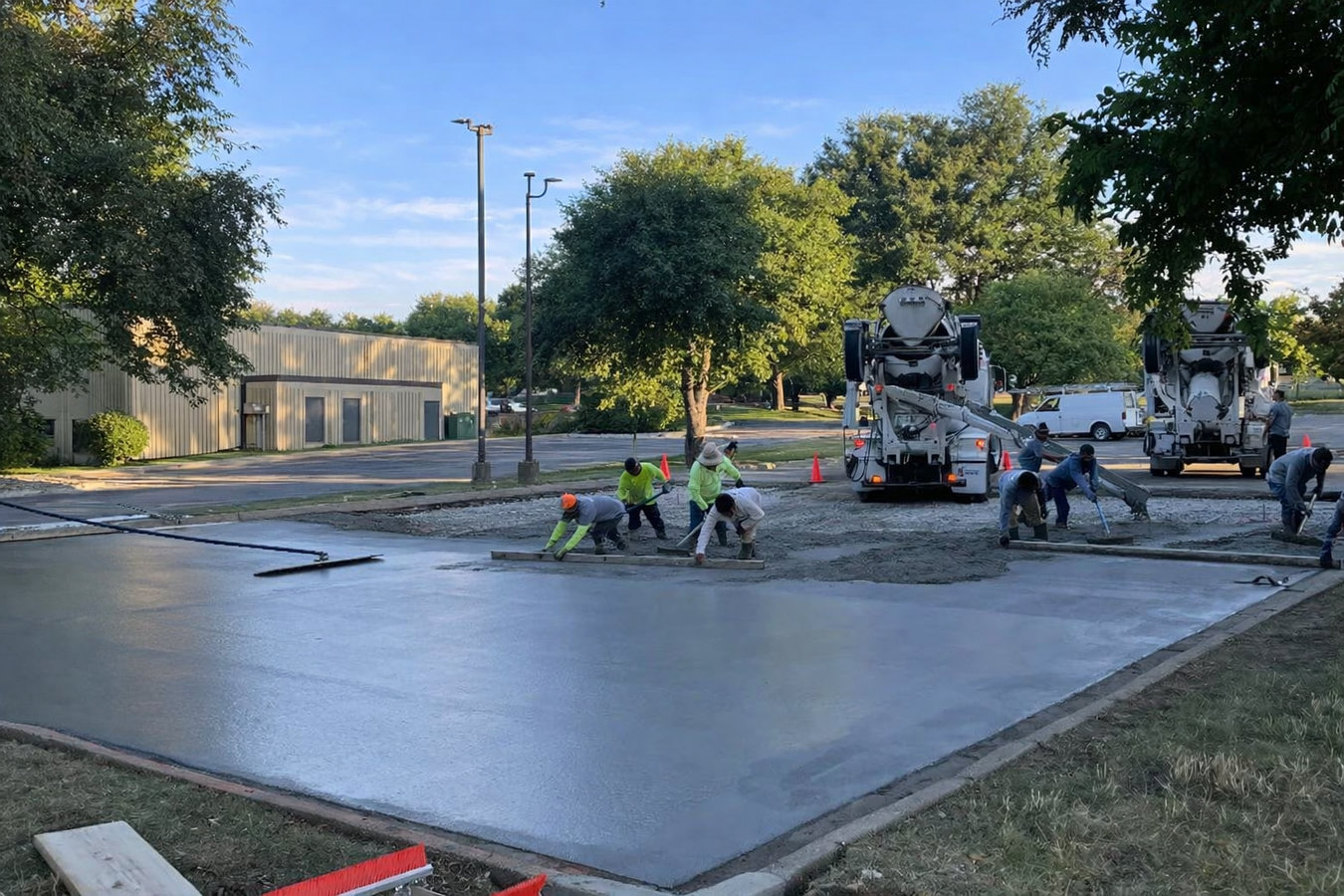
Gravel migrates, asphalt cracks, and dirt turns to mud every spring. A properly built concrete parking lot gives you a permanent, low-maintenance surface that drains correctly and handles Moorhead winters for decades.
Concrete parking lot building in Moorhead, MN means removing whatever surface exists now, grading the ground for drainage, compacting a deep gravel base to handle the Red River Valley's clay soil, and pouring a concrete slab thick enough for your intended vehicle load - most residential and small commercial lots take one to three days of active work, with a seven-day wait before vehicles can use the surface.
If you are upgrading from gravel, dirt, or damaged asphalt, you already know the frustration - mud in spring, dust in summer, migrating stones, and the ongoing cost of adding new material every few years. A concrete parking lot replaces all of that with a single permanent surface. Many Moorhead property owners also schedule concrete footings at the same time if they are adding a garage or accessory structure nearby - doing both in one mobilization saves money and ensures the grade works for both the lot and the building.
If your current pavement has cracks wider than a finger, sections that have heaved up, or chunks that have broken away entirely, the surface has reached the end of its useful life. In Moorhead's climate, these problems tend to worsen sharply each winter as water gets into cracks, freezes, and forces them wider. Patching buys time but rarely solves the underlying problem once the damage is widespread.
Standing water on a parking surface is a sign that it is no longer draining the way it was designed to, either because it has settled unevenly or the original drainage was poor. In the Red River Valley, where spring snowmelt can be substantial, a surface that holds water is being damaged every time temperatures drop - that water freezes, expands, and breaks the surface from below.
Many Moorhead properties still have gravel or packed-dirt parking areas, especially on older lots. If you are tired of gravel migrating into the yard, dust in dry weather, mud in wet weather, or the ongoing cost of adding new gravel every few years, a concrete lot eliminates all of those problems at once and requires almost no maintenance once it is properly built and sealed.
If you are building a new detached garage, workshop, or storage building, a concrete parking area in front of or around it is the logical next step. Doing both projects close together often saves money on mobilization costs and ensures the lot is designed to work with the new structure's drainage and grade from the start.
Every parking lot project starts with a site visit where we look at your existing surface, assess the slope and drainage, and talk through how the lot will be used before we give you a written price. We handle demolition and removal of old pavement or gravel - that work is itemized in your estimate so there are no surprise charges on the day the crew shows up. The base preparation - grading, compacting, and laying the gravel course - gets the same attention as the pour itself, because in Moorhead's clay soil, the base is what determines how long the lot lasts. Concrete driveway building can be combined with a parking lot project when you need the driveway and the lot to connect seamlessly.
We pull the required building permits from the City of Moorhead before work begins - permitted lots are inspected and documented, which protects you if you ever sell the property or have a question about the work. The concrete mix we use is air-entrained and designed for freeze-thaw resistance, which matters in a climate where road salt gets tracked onto every private surface through a long winter. Control joints are cut at planned intervals so any shrinkage cracks follow predictable lines rather than running across the middle of the lot.
Full build from demolition through finished concrete pour - suited for properties upgrading from gravel, dirt, or failed asphalt.
Break-up, loading, and hauling of existing pavement or gravel, included in the written estimate so there are no surprises on job day.
Grading the sub-base to the correct slope for drainage, then compacting a gravel course built for Moorhead's clay soil conditions.
Sloping the finished surface so water runs away from buildings and off the lot - the right grade prevents the freeze-thaw damage that destroys poorly drained lots.
Planned grooves cut into the cured surface at regular intervals to guide any shrinkage cracking into straight, manageable lines rather than random fractures.
After full curing, sealing the surface protects against road salt and moisture infiltration - especially important in Moorhead's long, salt-heavy winters.
Moorhead sits in the Red River Valley, where the soil is dominated by heavy clay left behind by ancient glacial Lake Agassiz. Clay soil holds water, expands when it freezes, and contracts as it dries - a cycle that puts constant upward pressure on anything built on top of it. A contractor who understands this will build a deeper, more carefully compacted gravel base before the pour, which adds some cost but is what separates a lot that lasts 30 years from one that starts heaving and cracking within five. The Fargo metro area shares the same soil conditions, so we apply the same base depth standards across the river.
The construction window in this region is compressed by a long winter - most contractors work from late April through October, and spring projects can be pushed back further when the ground stays saturated after snowmelt. Road salt applied from November through March gets tracked onto every private surface by vehicles, making a sealed, freeze-thaw-resistant concrete mix a practical requirement rather than an optional upgrade. In West Fargo and across Clay County, we see the same patterns - properties that invested in proper base preparation and sealing in year one are still in good shape decades later. Those that skipped shortcuts are calling for repairs long before the lot should need them.
Reach out by phone or the contact form and we will get back to you within one business day. We schedule a site visit to look at the existing surface, assess the drainage slope, and talk through how the lot will be used - this is the only way to give you an accurate written price.
After the site visit you receive a written estimate that itemizes demolition, base work, the pour, and any drainage design. Once you accept, we pull the required building permit from the City of Moorhead before any work begins - you do not need to handle that yourself.
The crew removes the old surface, grades the ground to the correct drainage slope, and compacts the gravel base layer. This phase typically takes one to two days. During this time the area needs to be clear of vehicles and stored items.
On pour day the concrete truck delivers and the crew spreads, levels, and finishes the slab. Keep all vehicles off the surface for at least seven days. After full curing, we walk the finished surface with you, explain the control joints, and answer any questions about care and sealing.
We give you a written estimate after seeing your site in person - no phone quotes, no surprise charges on job day.
(218) 227-4510Moorhead's clay soil expands with moisture and frost - a base that works in a sandier region will fail here. We size and compact the gravel course specifically for local soil conditions, which is what keeps the slab from heaving and cracking through long winters.
Minnesota requires contractors above a certain project threshold to carry a state license through the Department of Labor and Industry. We pull the required City of Moorhead permits before every job so your lot is inspected, documented, and fully protected. The{' '}Minnesota Department of Labor and Industry lists licensed contractors you can verify before hiring anyone.
A lot that holds water in Moorhead's climate is a lot that will crack within a few seasons. We design the drainage slope into the site plan before any concrete is poured - not as an afterthought once the surface is already in. Water moves off the surface and away from your building from day one.
Not all concrete mixes perform the same in a climate where temperatures swing 100 degrees between summer and winter. We specify air-entrained mixes designed for the freeze-thaw cycles that are normal in the Fargo-Moorhead area, which extends surface life significantly compared to a standard mix. The{' '}American Concrete Pavement Association publishes guidelines on mix selection for cold-climate pavement.
Every one of these details feeds into the same outcome: a parking lot that is still flat, draining correctly, and free of serious cracks long after lots built without this care have needed repairs. In a climate as hard on concrete as Moorhead's, the difference between a 10-year lot and a 30-year lot comes down to what happens before the truck arrives.
If your parking area connects to a garage or structure, proper concrete footings underneath support everything above ground.
Learn MoreExtend your parking project with a concrete driveway that connects your lot to the street with the same durability.
Learn MoreCall us today or request a free estimate online and we will come to your site, give you a straight written price, and get you on the schedule before the season fills up.